Saturday, July 20, 2024

Civil War?

Grab an adult beverage, or whatever, then read and think for a moment about the following:

“Is America getting ready to engage in another civil war? The question must be taken seriously. Roughly half of all Americans (as of 2023) think a civil war is likely. And a growing number of social scientists agree that the U.S. now fits the checklist profile of a country at risk. Trust in the national government is in steep decline. Check. Respect for democratic institutions is weakening. Check. A heavily armed population has polarized into two evenly divided partisan factions. Check. Each faction embodies a distinctive ethnic, cultural, and urban-vs-rural identity. Each wants its country to become something the other detests. And each fears the prospect of the other taking power. Check, check, and check.

“Most Americans, as we have seen, agree their country is becoming “less democratic” over time. Nearly all scholars agree with that assessment….Global research centers that track and analyze political indicators by country now categorize the U.S. as something less than a full democracy and anocracy [somewhere between democracy and autocracy].

“Less democracy, it turns out, could be an indicator that civil war is on the way….High trus democracies don’t often experience civil wars. Nor do low-trus tyrannies. It’s the middle ground that worries analysts….[According to Barbara F. Walter, a political scientist at UC San Diego:] ‘We are a factionalized anocracy that is quickly approaching the open insurgency stage, which means we are closer to civil war than any of us would like to believe.’…Yet, until it happens, few people ever think it would be possible in their own country. After interviewing people who lived through civil wars, Walter reports that none saw it coming. ‘They’re all surprised.’”

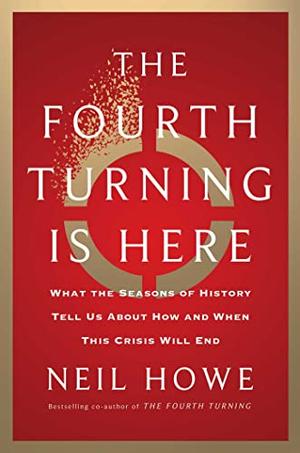
Excerpt from Neil Howe, “The Fourth Turning is Here: What the seasons of history tell us about how and when the crisis will end.” Simon & Schuster, 2023

The photo above was created by OpenAI’s ChatGPT 4o at my request. It illustrates the divided nation, the polarization, and the decline of democratic institutions as described in the excerpt.

Friday, July 5, 2024

Authoritarian Path to the Presidency

Having read many works on past authoritarian leaders, such as Hitler and Mussolini, and working with ChatGPT 4o, I wanted to construct the components of a plan to achieve the presidency and ultimately overthrow the existing political framework, using parallels to the past.


I requested that the AI use all resources available to ChatGPT 4o to detail an outline of a plan that might be used by a hypothetical authoritarian who aspires to achieve the U.S. presidency, and then eliminate the constitutional republic and replace it with a supreme dictator. I specifically asked the AI to provide any historic parallels to Hitler and Mussolini. We used “hypothetical authoritarian” instead of using a current identity, but the reader should be able to make a valid assumption as to who it might be.

Here are the results:

The following plan highlights the methods a hypothetical authoritarian might use to seize and maintain power in the United States, drawing clear parallels to the historical precedents set by Hitler and Mussolini.

1. Building a Base of Support

   a. Exploiting Economic Hardships:

     - Hitler capitalized on the economic turmoil of the Weimar Republic.

     - Mussolini took advantage of post-World War I economic instability in Italy.

     - Hypothetical Authoritarian could leverage economic crises to appeal to those disillusioned with the status quo, promising stability and prosperity.

   b. Cultivating Nationalism and Populism:

     - Hitler promoted Aryan supremacy and national revival.

     - Mussolini emphasized Italian nationalism and the restoration of Roman glory.

     - Hypothetical Authoritarian could emphasize American exceptionalism, stoking fear of external and internal threats to national identity.

2. Undermining Democratic Institutions

   a. Discrediting the Media:

     - Hitler controlled the press through propaganda and censorship.

     - Mussolini used state-controlled media to spread Fascist propaganda.

     - Hypothetical Authoritarian could attack and undermine the credibility of independent media, labeling them as enemies of the state and spreading misinformation through controlled channels.

   b. Weakening Judicial Independence:

     - Hitler purged the judiciary of non-compliant judges and replaced them with loyalists.

     - Mussolini established special courts to deal with political offenses.

     - Hypothetical Authoritarian could appoint loyalists to key judicial positions, ensuring court decisions favor the executive branch’s agenda.

3. Manipulating the Political System

   a. Leveraging Political Polarization:

     - Hitler exploited divisions within the Weimar Republic to weaken political opposition.

     - Mussolini capitalized on political fragmentation and the fear of communism.

     - Hypothetical Authoritarian could deepen political divides, positioning oneself as the only viable solution to a dysfunctional system.

   b. Controlling Electoral Processes:

     - Hitler used the Reichstag Fire Decree to suppress opposition and gain emergency powers.

     - Mussolini used electoral fraud and violence to secure Fascist majorities.

     - Hypothetical Authoritarian could implement policies that suppress voter turnout among opposition groups, gerrymandering districts to favor the ruling party, and potentially invoking emergency powers to delay or manipulate elections.

4. Consolidating Power

   a. Establishing a Cult of Personality:

     - Hitler portrayed himself as the savior of Germany, demanding absolute loyalty.

     - Mussolini created a larger-than-life image, positioning himself as Il Duce.

     - Hypothetical Authoritarian could cultivate a strong, charismatic image, demanding personal loyalty and suppressing dissent within the ranks.

   b. Militarizing Society and Government:

     - Hitler militarized the SS and other paramilitary groups to enforce his rule.

     - Mussolini used the Blackshirts to intimidate and eliminate opposition.

     - Hypothetical Authoritarian could increase funding and powers for domestic security agencies, encouraging loyalty to the leader rather than the constitution.

5. Neutralizing Opposition

   a. Eliminating Political Rivals:

     - Hitler conducted the Night of the Long Knives to purge SA leaders and other potential rivals.

     - Mussolini used political violence and legal measures to eliminate opposition.

     - Hypothetical Authoritarian could use legal, political, and extrajudicial measures to neutralize political opponents, ensuring no significant challenge to power remains.

   b. Repressing Civil Liberties:

     - Hitler suspended civil liberties through the Enabling Act and other decrees.

     - Mussolini imposed strict censorship and curtailed political freedoms.

     - Hypothetical Authoritarian could implement laws that limit free speech, assembly, and other civil liberties under the guise of national security.

6. Transforming the Government Structure

   a. Centralizing Authority:

     - Hitler abolished the federal structure of Germany, consolidating power in Berlin.

     - Mussolini centralized control under Fascist rule.

     - Hypothetical Authoritarian could gradually erode states’ rights, concentrating power in the federal executive branch.

   b. Creating Parallel Institutions:

     - Hitler established organizations like the Gestapo to bypass traditional law enforcement.

     - Mussolini created Fascist party organizations to control various aspects of society.

     - Hypothetical Authoritarian could establish parallel institutions loyal to the regime, capable of overriding traditional bureaucratic processes.

7. Maintaining Control

   a. Perpetuating Ideological Indoctrination:

     - Hitler used education and youth organizations to indoctrinate future generations.

     - Mussolini emphasized Fascist ideology in schools and youth groups.

     - Hypothetical Authoritarian could infuse educational curricula with nationalist propaganda, ensuring future generations remain loyal to the regime.

   b. Suppressing Dissent and Resistance:

     - Hitler utilized a network of informers and repressive measures to silence dissent.

     - Mussolini crushed opposition through intimidation and force.

     - Hypothetical Authoritarian could maintain an extensive surveillance state, using modern technology to monitor and suppress opposition activities.


Draw your own conclusions.


Tuesday, March 19, 2024

Dean of Students or Assistant Principal?

A public school district near and dear to my heart is trying to decide whether to eliminate the Dean of Students positions at all levels and replace them with Assistant Principals. This is not the case of making a simple title change due to the differences in minimal credentials required. In addition, the district has employed a dedicated, loyal individual as the secondary Dean of Students who has steadfastly remained responsible for discipline and attendance the past three decades. He has also taken on a larger district-wide role regarding attendance as well as safety and security. His responsibilities are by no means “narrow” as some might think, and he would like to remain employed with the district at least two more years before retiring on his own initiative.

The current Dean is well-liked by students, staff, and parents. Former students have claimed publicly that his ability to administer discipline, all while caring about them as individuals, was helpful to them and one of the main reasons they successfully got through school. At a recent regular board meeting where this issue was suddenly sprung on the community, so many people showed up to voice support for him that the meeting had to be moved to a larger venue.

The district is median-sized (1800 students) situated in a one-square-mile, working-class community consisting of a majority Hispanic and English-language-learner population. In the past eight years, the high school has had three different principals and the district has had four different superintendents, one of which served two stints as interim superintendent while the school board worked to fill the vacant position. Prior to that time, I had the pleasure of serving six years as secondary principal followed by nine years as superintendent before retiring.

As in most decisions, there are advantages and disadvantages. When a school district considers restructuring its administrative roles, it's essential to weigh these carefully. Here are some considerations that hopefully the school board and district leaders will take into account. I’m sure there are more and members of the staff and community, including current and former students, will likely see fit to air them at an upcoming community forum. This short list should be considered as a holistic grouping as some advantages also create disadvantages.

Advantages of Assistant Principals over Deans of Students:

Broader Scope of Responsibilities: Assistant principals typically have a wider range of responsibilities, including curriculum development, staff management, and student discipline, which can offer a more holistic approach to school leadership.


Leadership Continuity: Assistant principals are often seen as second-in-command and can provide continuity in leadership when the principal is unavailable. This might make transitions smoother during times of principal turnover or absence.


Professional Development: The role of assistant principal can be seen as a stepping stone to becoming a principal, offering a clear path for professional advancement. This could attract candidates with ambitious career goals and a strong dedication to educational leadership.


Disadvantages of Replacing Deans of Students with Assistant Principals:


Specialized Focus on Student Affairs: Deans of Students often specialize in student behavior, discipline, and support services. Eliminating this role might dilute the focus on student well-being and behavior management, which could impact the school's climate and student success.


Potential Overburdening of Assistant Principals: Expanding the role of assistant principals to cover duties traditionally handled by Deans of Students could overburden these administrators, potentially leading to burnout and reduced effectiveness in their broader duties.


Cost Considerations: Depending on the district's pay scale, hiring additional assistant principals instead of Deans of Students might lead to increased salary costs. This financial aspect must be considered, especially in districts facing budget constraints.


Other Considerations:


Community Impact: A changing administration can create an unstable environment for both teachers and students. This instability can affect morale and lead to increased stress and anxiety among the school community. It's important to listen to and communicate the reasons for such changes and how they will benefit the students.


Difficulty in Building Relationships: Effective administration relies on strong relationships with staff, students, and the community. Regular changes make it difficult to build these relationships, which are crucial for creating a supportive and productive school environment.


Staff and Student Adjustment: Any change in administrative structure requires an adjustment period for staff and students. The impact of these changes on school culture and morale should be carefully managed. Changes in administration can disrupt the continuity of policies, initiatives, and programs. Frequent changes can lead to reform fatigue among teachers and staff, making them resistant to new initiatives. Long-term projects might be halted or redirected, which can lead to wasted resources and opportunities. An unstable administrative environment can contribute to higher teacher turnover. Teachers may feel undervalued or uncertain about their future at the school, leading them to seek employment elsewhere.


Loss of Institutional Knowledge: With each administrative change, valuable institutional knowledge can be lost. New administrators may not be aware of past challenges, successes, or the specific needs of the school community, leading to repeated mistakes or overlooked opportunities.


Impact on School Culture: Consistent leadership helps to build a strong, positive school culture. Frequent changes can undermine this culture, leading to a lack of shared values and vision among students and staff.


Ultimately, the decision should be based on the specific needs and goals of the school district, considering both the immediate impact and the long-term implications of such a restructuring. Consulting with educational leaders, reviewing case studies of similar decisions in other districts, and engaging with the school community for feedback can also provide valuable insights into making the most appropriate choice.

Monday, February 19, 2024

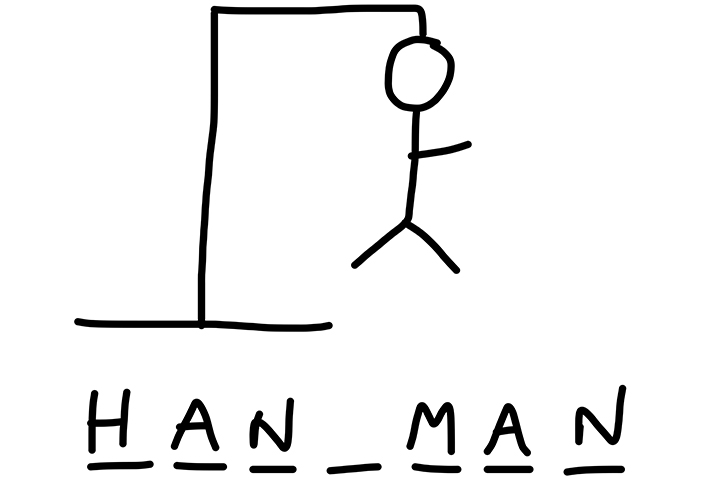
Summary of “H_NGM_N: What one says, and doesn’t say, to white educators“


Summary of https://kappanonline.org/what-one-says-doesnt-say-to-white-educators-beardslee/

The essay by Lois Beardslee, titled "H_NGM_N: What one says, and doesn’t say, to white educators," published on January 25, 2021, presents a poignant and critical reflection on racism, privilege, and the normalization of violence in educational settings, particularly through the lens of a Native American educator's experiences in northwest Lower Michigan. Here are the main points:


1. Racism and Denial of White Privilege: The author begins by setting the context of her experiences in a region characterized by "white-flight" communities, where discussions on racism and white privilege are vehemently avoided or denied by the white populace, despite overt racist behaviors.


2. Normalization of Violence: Beardslee critiques the use of the game "hangman" in educational settings, highlighting how it unconsciously normalizes historic violence against people of color, particularly lynching, and suggests considering alternative activities that do not glorify such violence.


3. Personal Experiences with Racism in Education: The author shares her extensive background in education and her struggles with racism, including direct threats and discrimination, which have limited her professional opportunities and forced her into low-status, substitute teaching roles.


4. Resistance to Change: Beardslee recounts an incident where she suggested rethinking the use of the game "hangman" to a white teacher, only to be met with anger and resistance, illustrating the broader unwillingness among white educators to acknowledge or address ingrained racial biases and norms.


5. Power Dynamics and Silence: The essay delves into the power dynamics in educational settings, where minority educators and students often feel compelled to remain silent about racism and discrimination for fear of retribution or further marginalization.


6. Impact on Children of Color: It also touches on the psychological impact of racism and discrimination on children of color, who learn from an early age that they cannot rely on white adults in authority positions for support or protection.


7. Systemic Exclusion of Minority Educators: Beardslee discusses the systemic barriers to employment for teachers of color in the region, which perpetuates a monocultural bias within education and discourages minority students from pursuing careers in teaching.


8. Personal and Familial Trauma: The author shares personal stories of racial violence experienced by her family, including the lynching of her grandfather, to underscore the deep, lasting trauma inflicted by such acts of hatred and the importance of not trivializing this history in educational contexts.


9. Critique of Educational Practices: The essay criticizes the educational system for its role in perpetuating racial violence and bias, both through the curriculum and the behaviors it normalizes, and calls for a reevaluation of teaching practices to better reflect a commitment to diversity and anti-racism.


10. Conclusion and Reflection: Beardslee concludes by reflecting on the broader implications of her experiences, questioning the norms that prioritize the comfort and convenience of white educators over the well-being and dignity of minority students and educators, and advocating for systemic change within education to address these deeply ingrained issues.


Note: After reading the original essay at the link, ChatGPT assisted with organizing my thoughts into this summary.

Sunday, October 8, 2023

Primer on The Fourth Turning

A number of years ago, I read the first of two books on The Fourth Turning and was captivated by the theory that originates from the book The Fourth Turning: An American Prophecy - What the Cycles of History Tell Us About America's Next Rendezvous with Destiny by William Strauss and Neil Howe. The authors propose a theory that history follows a cyclical pattern divided into four repeating turnings, each lasting about 20-22 years. These turnings comprise a full cycle known as a saeculum, which lasts roughly 80-90 years. The Fourth Turning is particularly notable as it's a time of dramatic transformation and potentially a fresh start for society.

Recently, Neil Howe published an update (or extended) version taking into account how the Fourth Turning has likely arrived, along with what we should expect. This primer (for lack of a better description) was written by ChatGPT artificial intelligence and edited by me for clarity. I chose to do so because I frequently mention "The Fourth Turning is Here" in my social media posts related to the current evidence I'm seeing. My hope is you will cruise through this and perhaps borrow the books from your local library or purchase them from your favorite bookstore. Perhaps you might even organize a local or online discussion group.

Here’s a simplified breakdown of the concepts and benchmarks involved:

The First Turning (High): This period is characterized by strong institutions, a sense of collective destiny, and a culture of optimism. It usually follows a crisis and is a time of societal reconstruction and harmony.

The Second Turning (Awakening): During this time, there's a cultural or spiritual awakening, often led by the youth. Institutions are questioned and individuals start prioritizing personal and spiritual autonomy over societal norms.

The Third Turning (Unraveling): This turning sees the weakening of institutions and a growing individualism. Societal trust diminishes, and the focus shifts from collective action to self-interest.

The Fourth Turning (Crisis): This is a period of crisis where society faces severe challenges that can be existential in nature. It's a time of collective action, strong leadership, and a willingness to resolve long-standing problems. Institutions are revamped or replaced, and at the end of this turning, a new societal order emerges.

These cycles are believed to be driven by generational dynamics, with each generation having distinct attitudes, behaviors, and experiences that shape the course of history. Strauss and Howe’s theory explores the recurring patterns in historical eras driven by generational experiences and behaviors. Each generation, shaped by its unique set of historical events and cultural experiences, influences the course of society in a predictable cycle. This doesn’t mean every member of a generation exhibits these attitudes and behaviors, but as a group, each generation follows the pattern.

Here's a simplified breakdown of recent and current generations as defined by Strauss and Howe:

Silent Generation (born 1928-1945): Known for their adaptive behaviors in childhood during the crisis of the Great Depression and World War II.

Baby Boomers (born 1946-1964): Born during a time of post-war prosperity, they're known for their optimism and traditional values.

Generation X (born 1965-1980): Known for their skepticism and individualism, having grown up during a time of societal unraveling.

Millennials (born 1981-1996): Known for their collective optimism and civic duty, having come of age during a time of crisis.

Homeland Generation (born 1997 and later): Expected to exhibit adaptive behaviors like the Silent Generation.

Within the context of Strauss and Howe's theory on generational cycles, an "archetype" refers to a generic, idealized model of a person or personality type that represents fundamental human themes. Each archetype has distinct collective behaviors, attitudes, and life stages that play out in a predictable pattern over time. The archetypes help to characterize and differentiate the generational cohorts, creating a framework to understand how different generations interact with one another and influence societal trends and historical events.

Here are the four archetypes they describe in relationship to their corresponding generation type, listed above, and the typical phase in which they were born (chart provided by ChatGPT):

These archetypes cycle in a specific order – Prophet, Nomad, Hero, Artist – across generations throughout each saeculum (a complete generational cycle of about 80 to 100 years), and the interplay among these archetypal generations shapes the course of history, according to Strauss and Howe's theory.

Other considerations with generational behaviors:

Generational dynamics suggests a cyclical pattern where each generation responds to the cultural, social, and economic conditions created by preceding generations. This cyclical pattern then influences major societal events and trends.

Generations often define themselves in reaction to other generations, especially their parents. Their collective behaviors and attitudes contribute to societal mood and the nature of the era they live through.

Significant historical events, shaped by generational behaviors, reinforce the cyclical nature of history. The generational dynamics help explain how societies evolve and face crises over time.

By understanding these dynamics, one can purportedly predict certain societal trends and changes based on the predictable behaviors and attitudes of each generational cohort. However, the theory does not imply there is a crystal ball that will tell us precisely when and how a turning will occur. Several historical periods have been identified by Strauss and Howe as Fourth Turnings, which are eras marked by crisis and significant transformation. Here are a few examples:

The American Revolutionary War (1775-1783): This period was marked by the struggle for independence from British rule, which eventually led to the establishment of a new nation with its own governing constitution.

The American Civil War (1861-1865): The crisis here was centered around the deeply divisive issue of slavery, leading to a brutal war. The aftermath saw the abolition of slavery and a redefinition of the nation’s values and governance.

The Great Depression and World War II (1929-1945): The economic collapse during the Great Depression, followed by the global conflict of World War II, significantly reshaped American society, leading to a new era of economic policies and international leadership.

Current Fourth Turning (2008-Present): Some proponents of the theory argue that the financial crisis of 2008 marked the beginning of a new Fourth Turning, which is yet to be fully realized. The ongoing challenges such as political polarization, economic uncertainty, and global pandemics like COVID-19 might be parts of this unfolding crisis.

Strauss and Howe's generational theory traces back through numerous saecula in Anglo-American history. Here are some examples of saecula and the associated Fourth Turning crises as illustrated by Strauss and Howe:

Late Medieval Saeculum (c. 1435-1487): Crisis: War of the Roses (1459-1487)

Reformation Saeculum (c. 1487-1594): Crisis: Armada Crisis (1569-1594)

New World Saeculum (c. 1594-1704): Crisis: Glorious Revolution (1675-1704)

These saecula are delineated by the four turnings—High, Awakening, Unraveling, and Crisis—that occur in a cyclical pattern. Each crisis, or Fourth Turning, is characterized by a period of upheaval and transformation that resolves the issues of the preceding Unraveling and lays the foundation for the subsequent High, starting the cycle anew. The generational archetypes—Prophet, Nomad, Hero, and Artist—cycle through in order during each saeculum, playing distinct roles in the unfolding of these historical events.

Strauss and Howe's analysis primarily focuses on Anglo-American history, but they also suggest that similar generational cycles could be identified in other cultures and regions, albeit with potentially different timing and characteristics.

Each of these periods of crisis led to profound changes in societal structures, values, and national identities, embodying the transformative essence of Fourth Turnings as described by Strauss and Howe. In the context of today, if we are indeed in a Fourth Turning, we might expect to see societal upheavals, strong leadership, collective actions to address systemic issues, and eventually, the emergence of a new societal order. 


Howe's recent book, The Fourth Turning is Here, suggests that the United States, and potentially other parts of the world, are currently navigating through a Fourth Turning, a period marked by crisis and significant transformation. Listed here are summaries of the evidence and insights provided in the book as per the various sources noted.

From City Journal, Review of The Fourth Turning is Here by Neil Howe:

  • Current Sociopolitical and Economic Malaise: Howe observes a contemporary American malaise characterized by governmental dysfunction, plummeting public trust in institutions, extreme partisan division, economic inequality, declining public health, moral and legal chaos, gender strife, and collapsing family formation and birth rates. He posits that these conditions were predictable and align with the characteristics of a Fourth Turning.
  • Historical Cyclical Model: The author's predictions are grounded in a historical model that identifies cycles (saecula) of approximately 80 to 100 years, comprising four "Turnings" of about 20 to 25 years each: a High, an Awakening, an Unraveling, and a Crisis (the Fourth Turning). This model suggests that generational dynamics drive these cycles as each generation's collective character is shaped by the societal conditions of the preceding Turnings. The process, as described by Howe, leads to a Crisis (Fourth Turning) that a new generation of "Heroes" must resolve, establishing a new societal order thereafter.
  • Anticipation of Crisis Resolution and National Transformation: Howe maintains a level of optimism, asserting that by the 2040s, after navigating through the challenging crisis period, the nation will transform, reversing the troubling trends observed today. He predicts a revitalized economy, lower income inequality, cultural flourishing, a new moral consensus, rejuvenated civic society, and renewed commitment to family life among other positive transformations.
  • Comparative Analysis with Past Crises: Reflecting on history, Howe highlights past Fourth Turnings including the Great Depression/World War II, the Civil War, and the American Revolution. He argues that similar societal trends preceded these crises, and that each crisis ultimately led to stronger nations. He strongly suggests that America will face a significant historical juncture before the mid-2030s, akin to past crises, which may entail civil conflict, geographic fragmentation, authoritarian rule, or major wars, yet ultimately leading to national rejuvenation.

From a quoted passage in The Fourth Turning is Here (2023) by Neil Howe, mentioning evidence of the transformation of the American republic: The assertion that "the old American republic is collapsing" and "a new American republic, as yet unrecognizable, is under construction" is a bold claim pointing towards the profound transformations anticipated in this Fourth Turning.

From the online Kircus Reviews (kirkusreviews.com/book-reviews/neil-howe/the-fourth-turning-is-here), the book delves into the collective personality of each living generation to make sense of the current crisis and explore how different generations will be affected by the challenges faced in the coming decade.

Howe's work is a complex weave of historical analysis, generational theory, and prognostication about the near future, rooted in the idea that the unfolding societal conditions are part of a larger cyclical pattern. Through The Fourth Turning is Here, he aims to provide both a diagnostic lens to interpret the present turmoil and a hopeful outlook for the nation's journey through crisis towards renewal.